Create your CubeMars account

Whether in drone gimbals, robotic vision systems, security surveillance equipment, or LiDAR platforms, gimbal motors directly affect system stability, control accuracy, and response speed. However, the market offers a wide variety of gimbal motor specifications, and different models vary significantly in torque, KV rating, encoder accuracy, vibration control, and other performance characteristics. Choosing a motor based solely on size or price often makes it difficult to meet actual application requirements.
Therefore, before purchasing a gimbal motor, understanding the key parameters that influence performance and conducting a comprehensive evaluation based on the specific application scenario is an important step toward improving system reliability and reducing development risks.
A gimbal motor is a brushless motor specifically designed to stabilize and control platform orientation. It is widely used in camera gimbals, drone gimbals, robotic vision systems, security surveillance equipment, LiDAR platforms, electro-optical tracking systems, surveying devices, and many other applications.
Unlike conventional servo motors, gimbal motors are typically required to provide smooth and continuous torque output at low speeds or even in a stationary state to achieve high-precision attitude control. As a result, gimbal systems place much higher demands on torque output, response speed, operational smoothness, and control accuracy.
With the rapid development of drones, robotics, intelligent vision devices, and automation systems, gimbals have become an essential component for ensuring stable operation and precise positioning. However, different applications have different performance requirements. For example, drone gimbals place greater emphasis on weight and power consumption, while robotic vision systems focus more on dynamic response and control accuracy.
Therefore, when selecting a gimbal motor, comparing only dimensions, price, or rated power is often insufficient. Engineers and procurement professionals should also pay close attention to key indicators such as torque performance, encoder accuracy, cogging torque, response speed, and thermal performance to ensure the selected motor truly meets project requirements.
Rated Torque
Rated torque is one of the most important indicators of a gimbal motor's continuous output capability and is often the first parameter engineers evaluate during motor selection. It determines whether the motor can reliably drive the load over long periods while maintaining the target orientation when subjected to external disturbances.
In a gimbal system, the motor must not only rotate the payload but also continuously resist the effects of gravity, inertia, and external vibration. If the rated torque is insufficient, control accuracy may suffer even when advanced control algorithms are employed.
Insufficient torque typically leads to:
Gimbal vibration
Control instability
Increased tracking error
Continuous motor overload
Excessive temperature rise
In practical projects, rated torque should be evaluated based on factors such as:
Camera weight
Lens weight
Sensor weight
Center of gravity position
Gimbal dimensions
Motion acceleration requirements
For example, surveillance gimbals equipped with telephoto lenses often require motors with higher torque ratings due to their larger load inertia. In drone gimbal systems, however, engineers must find the optimal balance between torque output and weight.
As a general guideline, it is recommended to reserve a safety margin of 20% to 50% above the calculated torque requirement to ensure long-term stable operation.
Peak Torque
In addition to rated torque, peak torque is another important parameter for evaluating the dynamic performance of a gimbal motor.
Peak torque represents the maximum torque that the motor can produce over a short period and directly influences the system's transient response capability.
Peak torque plays a critical role in situations such as:
Rapid startup
Emergency braking
External disturbance compensation
Large-angle attitude adjustment
High-speed target tracking
In robotic vision systems, for example, when a target suddenly changes direction, the gimbal must correct its orientation within a very short time. If peak torque is insufficient, the system may fail to track the target accurately, affecting recognition and measurement performance.
In drone camera gimbals, wind disturbances encountered during flight also require the motor to generate short bursts of high torque for compensation. Therefore, engineers should evaluate both continuous output capability and peak torque performance during motor selection.
KV Rating (Speed Constant)
The KV rating is an important parameter of brushless motors and represents the theoretical no-load rotational speed generated per volt applied to the motor.
For example:
KV100 means 100 RPM per volt
KV50 means 50 RPM per volt
Although the KV rating is commonly discussed in drone propulsion systems, it is also relevant in gimbal applications. In gimbal systems, the KV rating primarily reflects speed characteristics, while rated torque, torque constant (Kt), and control accuracy are usually more important factors during motor selection.
In general, low-KV motors offer a higher torque constant, while high-KV motors provide greater speed capability.
Since gimbal systems primarily operate at low speeds or even in a stationary state, most gimbal motors adopt low-KV designs to achieve smoother output characteristics and higher control precision.
Selecting a motor with an excessively high KV rating may result in:
Less smooth low-speed control
Reduced fine-positioning capability
Increased power consumption
Higher operating temperatures
Therefore, in gimbal applications, a higher KV rating is not necessarily better. Instead, it should be selected according to the load requirements and control objectives of the system.
Torque Constant (Kt)
Compared with the KV rating, the torque constant (Kt) often provides a more direct indication of a motor's actual performance in gimbal applications.
Kt represents the amount of torque produced per unit of current and is typically expressed in Nm/A.
The higher the torque constant, the more torque the motor can generate with the same current.
Motors with a high Kt value generally offer the following advantages:
Higher torque output
Better current utilization efficiency
Lower heat generation
Reduced energy consumption
Longer battery life
For gimbal systems that need to operate continuously for extended periods, a high-Kt design can significantly reduce the burden on both the motor driver and power supply.
For example, in mobile robots, inspection systems, and outdoor surveillance platforms, gimbals often need to operate continuously for hours or even days. In these situations, high-Kt motors not only improve energy efficiency but also reduce the impact of temperature rise on system stability.
It is worth noting that the KV rating and Kt are generally inversely related. Therefore, motor selection should not be based on a single parameter alone. Instead, engineers should evaluate torque requirements, operating speed, power supply conditions, and control precision as a complete system.
Encoder Accuracy
Most modern high-performance gimbal systems utilize closed-loop control, making encoder performance a critical factor.
Common encoder types include:
Magnetic encoders
Optical encoders
Dual-encoder systems
Higher encoder resolution provides:
More precise attitude control
Lower tracking error
Better stabilization performance
For industrial vision systems and surveying equipment, high-precision encoders have become a standard requirement.
Cogging Torque
Cogging torque is one of the most important factors affecting smooth gimbal operation.
Excessive cogging torque can lead to:
Low-speed vibration
Micro-oscillations
Blurred images
High-quality gimbal motors typically employ multi-pole designs, optimized magnetic circuits, and specialized stator slot geometries to minimize cogging effects. Low cogging torque is particularly important for photography and electro-optical tracking applications.
Response Speed
Since gimbals continuously compensate for external disturbances, the motor's dynamic response capability directly affects stabilization performance.
Key parameters to evaluate include:
Torque response speed
Acceleration capability
Control bandwidth
Motors with faster response characteristics can correct attitude deviations more quickly, improving overall system stability.
Vibration and Noise Levels
For vision systems, vibration control directly affects image quality.
Low-vibration motors can:
Improve image clarity
Reduce control errors
Enhance user experience
In applications such as drone aerial photography, camera gimbals, laser scanning equipment, and electro-optical tracking platforms, vibration performance is often more important than rotational speed specifications.
Motor Size and Installation Space
Gimbal systems often have strict size and weight limitations.
Key dimensions to compare include:
Outer diameter
Length
Weight
Mounting hole pattern
This is especially important in drones and mobile robots, where motor dimensions directly affect overall system layout and center-of-gravity design.
In general:
Larger-diameter motors can provide higher torque
Shorter axial lengths support more compact designs
Therefore, torque density has become an important performance metric for gimbal motors.
Operating Voltage and Driver Compatibility
Common operating voltages include:
12V
24V
48V
Before purchasing, it is important to verify:
Rated motor voltage
Driver compatibility
Control interface requirements
Common control interfaces include:
PWM
UART
CAN Bus
RS485
For robotics and industrial automation equipment, CAN Bus has become one of the most widely adopted communication standards.
Thermal Performance
Gimbal motors are often required to continuously generate holding torque.
If thermal management is inadequate, the following issues may occur:
Excessive temperature rise
Magnet demagnetization
Reduced control performance
Shortened service life
Engineers should carefully evaluate continuous output capability, temperature-rise specifications, and cooling structure design. Thermal performance becomes particularly important in outdoor, high-temperature, or industrial environments.
While rated torque, encoder accuracy, and response speed are all important factors, different applications prioritize different performance characteristics. The key to motor selection is not choosing the motor with the highest specifications, but selecting the solution that best matches the application requirements.
For example, compact camera gimbals typically prioritize lightweight construction and low vibration performance, while industrial vision systems and LiDAR platforms require higher control accuracy and dynamic response capabilities. To address these varying requirements, CubeMars offers multiple gimbal motor models for different load capacities and application scenarios.
The following table summarizes key selection priorities for typical applications.
Application | Priority Parameters | Recommended CubeMars Models |
Camera Gimbals | Low cogging torque, low vibration | |
Drone Gimbals | Lightweight design, torque density | |
Security Surveillance | Long service life, reliability, stability | |
LiDAR Platforms | Encoder accuracy, response speed | |
Robotic Vision Systems | Dynamic performance, control accuracy | |
Industrial Surveying Equipment | Stability, continuous output capability |
Since different applications prioritize different performance characteristics, motor selection should be based on a comprehensive evaluation of actual requirements rather than simply pursuing higher torque or higher rotational speed.
As robotics, drones, and intelligent vision systems continue to advance, gimbal motors are evolving toward higher performance, greater precision, and lighter-weight designs. In high-end applications, gimbal motors are no longer responsible solely for stabilization—they also directly influence image quality, tracking accuracy, and system response speed.
Higher Torque Density
Through optimized electromagnetic design and the adoption of advanced magnetic materials, modern gimbal motors are capable of delivering greater torque while maintaining smaller dimensions and lower weight. This trend is particularly valuable for drone gimbals, portable stabilization systems, and mobile robotic vision platforms, as it improves payload capacity and disturbance rejection without increasing system weight.
Lower Cogging Torque
Cogging torque directly affects smooth operation at low speeds and in stationary holding conditions. Future gimbal motors will further reduce cogging effects through optimized magnetic circuit design, stator and rotor geometry improvements, and refined pole-slot combinations, thereby minimizing micro-vibrations and improving stabilization accuracy.
This characteristic is particularly important in camera gimbals, LiDAR platforms, and high-precision vision tracking systems, where even minor vibrations can affect image quality or measurement accuracy.
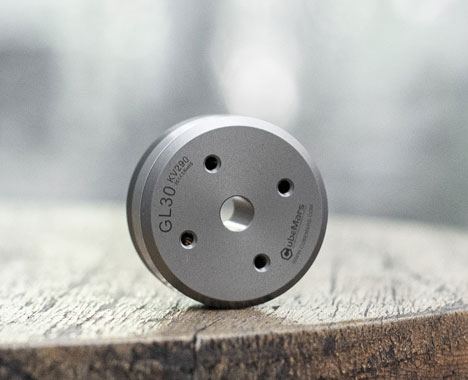
In applications that demand extremely low vibration levels, such as camera gimbals and vision stabilization systems, CubeMars GL30 KV290 and GL35 KV100 are commonly selected for lightweight systems requiring exceptionally smooth motion control.
Higher Encoder Accuracy
As industrial vision, automated surveying, and intelligent inspection systems continue to advance, the demand for highly accurate gimbal positioning continues to grow. The adoption of high-resolution magnetic and optical encoders enables more precise position feedback and improved closed-loop control performance.
Higher encoder accuracy provides:
Finer attitude adjustment capability
Lower tracking error
More stable dynamic control performance
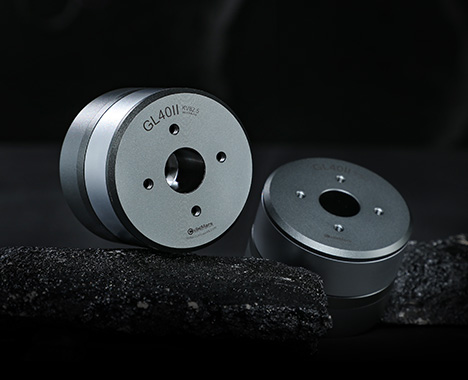
In these high-precision closed-loop applications, CubeMars GL60 II KV28 and GL40 II KV82.5 are frequently used in vision platforms and industrial-grade gimbal systems that require highly stable feedback control.
Lighter Weight and Higher Power Density Designs
Weight remains one of the most critical factors in drone and mobile-device applications. Gimbal motors continue to evolve through structural optimization, advanced materials, and improved magnetic circuit design to reduce weight while maintaining high output performance.
Lightweight designs not only extend drone flight endurance but also improve gimbal response speed, allowing stable operation even in high-dynamic environments.
For example, in drone gimbal systems, CubeMars GL30 KV290 and GL35 KV100 are widely used in compact aerial photography gimbals and mobile vision platforms thanks to their lightweight construction and responsive performance.
Faster Dynamic Response Performance
Beyond static stabilization, dynamic response capability is becoming increasingly important. When tracking fast-moving targets or compensating for sudden environmental changes, the motor must rapidly adjust torque output to maintain image and sensor stability.
In high-dynamic control systems such as robotic vision platforms and high-speed tracking gimbals, CubeMars GL80 KV60 and GL100 KV10 are often selected for applications requiring higher control bandwidth and stronger drive capability.
In the future, gimbal motors will continue to improve in control bandwidth, acceleration response, and low-latency control performance, further enhancing overall system responsiveness and tracking capability.
A gimbal motor does far more than simply rotate a platform—it directly determines stabilization accuracy, response speed, and the overall user experience. When selecting a motor, focusing only on size and price is rarely sufficient. Parameters such as rated torque, peak torque, encoder accuracy, cogging torque, dynamic response, and thermal performance all play critical roles in determining final system performance.
By thoroughly evaluating these key specifications, engineers can select the most suitable gimbal motor solution for their specific application, improving product performance while reducing development risk.


