Create your CubeMars account

With the rapid development of underwater robots, marine exploration equipment, and unmanned underwater systems, the importance of propulsion systems in overall platform performance continues to increase.
In underwater environments, thrusters not only provide fundamental propulsion power, but also directly affect motion control accuracy, operational stability, and mission execution efficiency.
Compared with conventional ground or aerial drive systems, underwater propulsion systems are required to operate for long periods in far more complex and uncertain environments. As a result, their design and selection have gradually evolved from a simple power-matching issue into a system-level engineering challenge.
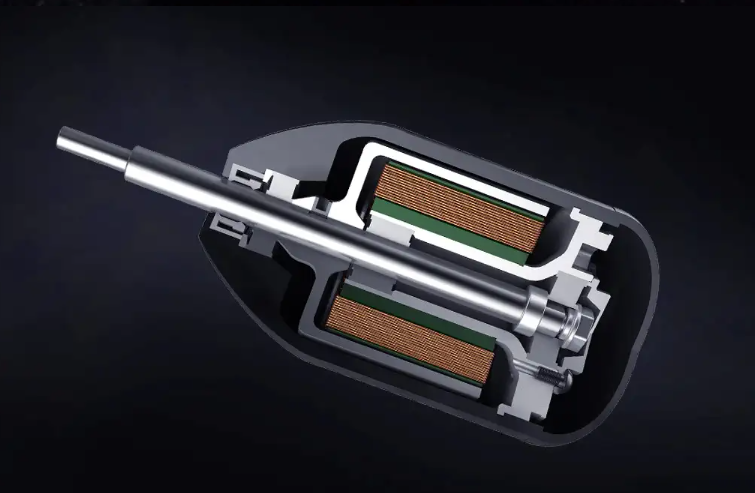
The complexity of underwater propulsion systems is not caused by a single factor, but rather by the long-term combination of multiple environmental constraints.
Under real operating conditions, thrusters must not only generate thrust, but also continuously deal with sustained loads, heat accumulation, water flow disturbances, and long-term reliability challenges. Because of this, underwater propulsion systems often need to strike a balance among power output, efficiency, control performance, and structural reliability.
The High-Resistance Water Environment Keeps the System Under Continuous Load
During underwater operation, thrusters must continuously overcome hydrodynamic resistance to maintain movement. This means system loads are usually not as frequently fluctuating as those in ground-based equipment, but instead remain within a relatively stable yet high-load range for extended periods.
For propulsion systems, the defining characteristic of this operating condition is not "high peak load," but rather"continuous high load." Prolonged operation under such conditions makes the system far more sensitive to efficiency, thermal management, and continuous output capability.
From an engineering perspective, these operating conditions typically lead to several noticeable changes:
| Operating Characteristics | Impact on the System |
| Long-duration continuous load | Significantly increased thermal management pressure |
| Stable low-to-medium speed operation | Propulsion efficiency directly affects endurance |
| Steady-state propulsion demand | Higher requirements for output consistency |
Compared with peak performance, underwater propulsion systems are often more focused on long-term stable output capability. For many ROV and AUV platforms, the ability of a thruster to operate reliably for tens of minutes or even several hours is often more important than short-term burst thrust performance.
Sealed Structures Restrict Heat Dissipation Paths
To ensure reliable underwater operation, thrusters typically adopt highly sealed structures to prevent seawater from entering the internal system.
However, sealing does more than improve waterproofing capability — it also fundamentally changes the way heat is transferred throughout the system.
In air environments, heat generated by motors can dissipate relatively quickly through airflow. Inside sealed structures, however, heat can only be released mainly through housing conduction and limited structural heat transfer paths.
This means:
Heat is more likely to accumulate internally
Temperature rise continues increasing during long-term operation
High-load conditions are more prone to efficiency degradation
Continuous output capability becomes constrained by thermal limitations
Furthermore, thermal issues gradually begin affecting control stability.
As system temperatures continue rising, the driver may enter protective states, and output performance may fluctuate, ultimately affecting propulsion stability and control accuracy.
Therefore, for underwater propulsion systems, thermal management is not merely a secondary design consideration, but a critical factor that determines continuous operating capability.
Continuous Influence of Water Disturbances on Control Systems
Real underwater environments are never completely stable or stationary.
Even when a thruster provides stable thrust, the platform may still be continuously affected by currents, vortices, or attitude changes. As a result, the propulsion system must constantly perform dynamic corrections.
This also means that, in many cases, the thruster is no longer just a "power source," but also an actuator within the control system.
Common control tasks include:
Hovering and station keeping
Attitude stabilization
Path tracking and correction
Multi-thruster coordinated control
These tasks place requirements on the system that go beyond simply 'having enough thrust.' The key challenge becomes whether the thruster can respond to control commands in a stable, rapid, and smooth manner.
For example, during low-speed hovering, noticeable fluctuations in thruster output can easily cause platform drift. During dynamic path correction, insufficient response speed may introduce control lag into the system.
The Impact of Deep-Water Environments on Long-Term Reliability
Beyond operational performance, underwater propulsion systems must also withstand long-term structural impacts caused by harsh environments.
Particularly in seawater or deep-water environments, corrosion, high pressure, and continuous long-duration operation gradually affect system lifespan and stability.
Unlike immediate performance issues, these effects often accumulate progressively over time.
For example:
Seawater corrosion may accelerate structural aging
Deep-water pressure increases sealing difficulty
Long-term operation increases bearing and seal wear
Thermal cycling may affect material stability
Because of this, many industrial-grade underwater propulsion systems prioritize long-term reliability during the design stage, rather than focusing solely on short-term performance.
From an engineering perspective, common optimization directions include:
| Design Direction | Engineering Purpose |
| Corrosion-resistant materials | Extend environmental adaptability |
| High-grade sealing structures | Improve waterproof reliability |
| Depth-adaptive design | Meet varying underwater depth requirements |
| Industrial-grade bearing systems | Improve long-term operational stability |
For deep-water equipment or long-duration mission platforms, reliability often determines whether the system can continue operating, not merely whether performance is sufficient.
Conclusion
The complexity of underwater propulsion systems fundamentally comes from the combined influence of multiple environmental factors.
Continuous high-load operation increases demands on efficiency and thermal management; sealed structures restrict heat dissipation paths; dynamic water environments require thrusters to continuously participate in control processes; and long-term seawater exposure further raises the requirements for system reliability.
Together, these factors define a clear trend: modern underwater propulsion systems are no longer simple power components, but system-level engineering units that integrate propulsion, thermal management, control performance, and structural reliability. It is precisely because of these constraints that the selection logic for underwater thrusters differs significantly from that of traditional drive systems.
After understanding the complexity of underwater propulsion systems, the selection process truly enters the engineering implementation stage.
In many cases, the focus of thruster selection is no longer simply "how large the peak thrust is" but whether the system can maintain long-term stable operation under complex working conditions.
In other words, what truly matters is not short-term performance, but whether the thruster can maintain a balance among efficiency, thermal stability, control performance, and reliability.
Propulsion Efficiency: The Foundation of Endurance Capability
In underwater systems, propulsion efficiency affects not only movement speed, but also directly determines the endurance capability of the entire platform.
Since most underwater missions involve long-duration continuous operation, efficiency differences become increasingly amplified over time, ultimately impacting battery consumption, heat accumulation, and mission duration.
For endurance-focused platforms such as AUVs, efficiency often directly determines operational range and mission time.
From a system perspective, propulsion efficiency simultaneously influences multiple aspects:
| Impact Area | Practical Result |
| Energy consumption | Directly affects endurance time |
| Heat generation | Influences system temperature rise |
| Output efficiency | Determines thrust performance per unit of power consumption |
In many cases, efficiency issues do not immediately appear as"insufficient thrust,"but rather manifest as:
Faster battery depletion
Increased system temperature rise
Gradual performance degradation during long-duration operation
Therefore, during actual thruster selection, efficiency is often more important than peak thrust specifications alone.
Continuous Output Capability: More Important Than Peak Thrust
For most underwater platforms, thrusters are not designed to operate for only a few seconds.
Compared with short-term burst capability, systems rely far more on stable long-duration output to sustain mission operation.
If a propulsion system can only provide high thrust for a short period, it may quickly enter thermal derating conditions or experience thrust degradation under real operating environments.
From an engineering perspective, continuous output capability is actually the result of multiple factors working together, including:
Motor efficiency
Drive and control strategy
Thermal management capability
Housing heat conduction efficiency
Long-term load stability
In other words, continuous output capability is not an isolated parameter, but rather a reflection of overall system performance.
In many real-world projects, thrusters with very high rated thrust may not maintain stable performance during long-duration missions. In contrast, solutions with stronger continuous output capability are often better suited for real underwater environments.
Dynamic Response and Control Precision: Key Factors Affecting Motion Quality
Once thrusters begin participating in attitude control, the focus of the system shifts from thrust itself to response quality during the control process.
Particularly during hovering, path correction, or complex trajectory motion, thrusters must continuously respond to control commands and rapidly adjust their output state.
If response speed is insufficient, the platform may experience noticeable control lag.
If output is not smooth enough, attitude fluctuations and trajectory deviations may occur.
Under these operating conditions, propulsion systems typically need to prioritize:
Control response speed
Output smoothness
Low-speed operational stability
Multi-thruster consistency
Among these, low-speed control capability is often overlooked.
However, in many underwater missions, platforms do not operate at high speed all the time. Instead, they frequently require low-speed hovering, precise approach maneuvers, or stable target observation. In these situations, whether the thruster can maintain stable output at low speeds directly affects the overall control experience of the platform.
From the perspective of the control system, the thruster has effectively become an integrated part of the motion control system itself.
Protection and Reliability: Determining Whether the System Can Operate Long-Term
Underwater propulsion systems operate for extended periods in high-humidity, high-pressure, and corrosive environments. As a result, many issues do not appear immediately, but gradually emerge over time.
For experimental platforms, short-term performance may already be sufficient. However, for industrial-grade equipment, reliability often determines whether the entire platform is capable of long-term operation.
In practical selection processes, the following aspects usually require particular attention:
| Design Aspect | Importance to the System |
| Corrosion-resistant design | Extends long-term service life |
| Sealing level | Determines applicable operating depth |
| Structural strength | Improves adaptability to deep-water environments |
| Bearing system | Enhances long-term operational stability |
It is important to note that these parameters may not directly improve thrust performance, but they significantly influence system lifespan and maintenance intervals.
For long-term deployment platforms, these factors are often just as important as propulsion performance itself.
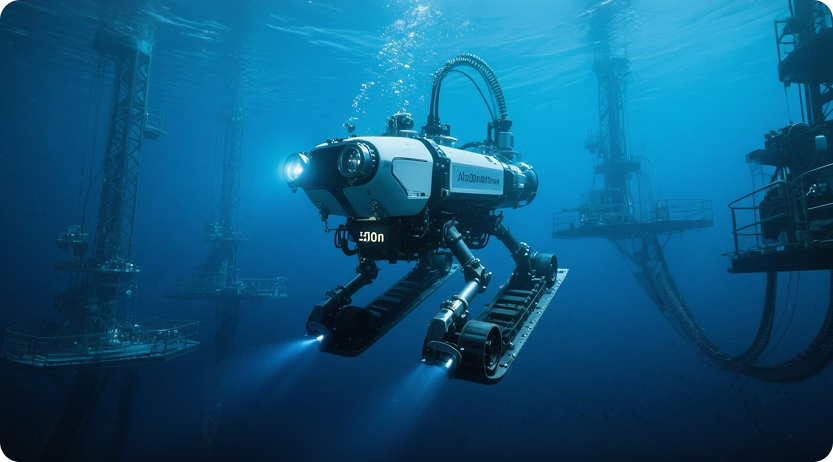
After analyzing the core parameters that influence underwater thruster performance, another practical issue must be considered:
Even when using the same propulsion technology, different types of underwater platforms may have completely different priorities when it comes to thruster requirements.
Some systems place greater emphasis on thrust and control capability, while others focus more on endurance efficiency. For compact platforms, structural size and weight may even become more critical constraints than performance itself.
In other words, there is no universally 'best' thruster solution. In many cases, thruster selection is more about finding the most suitable balance for a specific application scenario.
Industrial ROVs: Greater Focus on Thrust Stability and Control Capability
For industrial-grade ROVs (Remotely Operated Vehicles), propulsion systems are often required to operate continuously in complex environments for extended periods, such as offshore engineering, underwater inspection, pipeline maintenance, or deep-water operations.
These platforms typically face:
Strong water current disturbances
High-load tool operation
Long-duration hovering control
Multi-thruster coordinated movement
As a result, the system focus is not simply 'whether the platform can move,' but whether it can maintain stable control continuously under complex environmental conditions.
From an engineering perspective, industrial ROVs usually place greater emphasis on the following areas:
| Core Requirement | Propulsion System Requirement |
| Heavy-load operation | Stronger continuous output capability |
| Attitude stability | Smoother thrust control |
| Resistance to water disturbances | Faster dynamic response capability |
| Long-duration operation | More stable thermal management capability |
For these platforms, the thruster is already deeply integrated into the overall motion control system.
For example, during station-keeping operations, multiple thrusters must continuously fine-tune their output to counteract attitude deviations caused by external water currents. If the thrusters cannot respond quickly enough, or if low-speed output is unstable, the platform may experience noticeable drift.
Furthermore, industrial ROVs often carry robotic arms, camera systems, or inspection equipment, which further increases the platform’s requirements for attitude stability.
Because of this, such platforms typically prioritize:
Propulsion systems with stronger continuous output capability
Drive solutions with faster control response
Structural designs with higher long-term operational stability
Compared with maximum speed, industrial platforms place greater importance on overall stability under complex working conditions.
AUVs: Greater Emphasis on Efficiency and Endurance
Unlike ROVs, AUVs (Autonomous Underwater Vehicles) typically place greater emphasis on autonomous navigation capability.
Since many AUVs operate independently without external power supply, propulsion system efficiency directly affects mission range and operational duration.
For these platforms, the thruster is not only a power source, but also one of the largest sources of energy consumption.
Once propulsion efficiency becomes insufficient, the system may quickly encounter several problems:
Significantly increased battery consumption
Reduced effective mission duration
Shorter cruising range
Heat accumulation affecting long-term stability
Therefore, AUV propulsion systems are usually designed more around high-efficiency cruising rather than short-duration high-thrust output.
From a typical engineering perspective, AUVs focus more on:
Propulsion efficiency per unit of power consumption
Stable low-to-medium-speed cruising performance
Long-duration continuous operating capability
Overall system energy consumption control
The operational characteristics of many AUV platforms are actually closer to 'long-term stable cruising' rather than highly dynamic maneuvering.
As a result, the engineering focus gradually shifts from peak performance toward:
Propulsion efficiency
Thermal management capability
Long-term stable output
Low-power control strategies
For long-endurance platforms, the benefits of efficiency improvements are continuously amplified throughout the mission cycle.
Compact Underwater Platforms: Stronger Constraints on Size and Weight
Compared with industrial platforms, compact underwater systems usually face far stricter space and weight limitations.
For example, educational platforms, compact observation systems, portable ROVs, or lightweight experimental platforms often cannot reserve large installation space for propulsion systems.
Under these conditions, thruster selection must consider not only performance, but also:
| Constraint Area | Impact on System Design |
| Size limitations | Thruster structures must be more compact |
| Weight limitations | Higher power density is required |
| Limited battery capacity | Greater dependence on efficient operation |
| Restricted layout space | Greater emphasis on integrated design |
These platforms usually do not simply pursue maximum thrust, but instead focus more on:
Power density
Structural compactness
Control integration capability
Ease of system deployment
For example, in some compact platforms, even if a thruster provides sufficient thrust, excessive overall size may create difficulties for internal layout design and may even affect buoyancy distribution and attitude balance.
At the same time, compact platforms typically have more limited heat dissipation capability, meaning the system is more vulnerable to heat accumulation.
For lightweight platforms, this requires propulsion systems to simultaneously balance:
Output capability
Size control
Energy consumption performance
Thermal management capability
In many cases, the real challenge is not whether performance is sufficient, but how to achieve overall system balance within extremely limited space.
Conclusion
Different types of underwater platforms place completely different engineering priorities on propulsion systems.
Industrial ROVs emphasize thrust stability and dynamic control capability; AUVs focus more on propulsion efficiency and endurance performance; while compact platforms are strongly constrained by structural size, weight, and power consumption limitations.
Because application goals differ, there is no universal standard for thruster selection.
A truly reasonable selection strategy usually requires comprehensive evaluation based on:
Platform operating mode
Mission duration
Control requirements
Space limitations
Energy consumption budget
Only after understanding these application differences can the selection process move into the actual propulsion design stage: determining the appropriate propulsion solution and drive configuration according to specific mission requirements.
After identifying the application characteristics of different underwater platforms, thruster selection truly enters the practical engineering stage.
In many cases, the challenge of propulsion system design is not whether a suitable thruster exists, but whether the correct selection logic can be established according to the platform's mission requirements.
For underwater systems, thruster selection usually affects multiple aspects simultaneously, including:
Mobility performance
Energy consumption
Control stability
System layout
Long-term reliability
This means the selection process is fundamentally about finding a balance among multiple constraints, rather than simply comparing a single parameter.
Step 1: Clearly Define the Platform Mission Type
One of the most common mistakes in thruster selection is focusing too early on thrust specifications while overlooking the platform's actual mission objectives.
In reality, different mission scenarios often place completely different requirements on propulsion systems.
For example:
| Platform Type | Main Priority |
| Industrial ROV | Thrust and control stability |
| Long-endurance AUV | Propulsion efficiency and endurance |
| Compact platforms | Size, weight, and integration |
| High-dynamic platforms | Response speed and maneuverability |
Before selecting a thruster, several key questions should first be clarified:
What kind of environment will the platform mainly operate in?
Is long-duration continuous operation required?
Is precise attitude control necessary?
Are there strict space or weight limitations?
Is the platform focused more on cruising or highly dynamic movement?
These questions directly determine the overall propulsion strategy.
For example, for cruising platforms, efficiency is often more important than peak thrust. In contrast, for complex operational platforms, control response capability may have higher priority.
As a result, in many engineering projects, the first step in thruster selection is not 'choosing a product,' but defining the system objectives first.
Step 2: Determine Thrust Requirements Based on Operating Conditions
Once the platform mission is defined, the next step is estimating propulsion requirements.
However, for underwater systems, thrust demand should not simply be interpreted as 'the more, the better.'
Higher thrust usually also means:
Greater power consumption
Higher thermal load
Larger structural size
Increased battery burden
Therefore, propulsion system design typically requires balancing "thrust capability" against "overall system burden."
From an engineering perspective, thrust demand is usually influenced by several factors:
Overall platform weight
Hydrodynamic resistance
Target operating speed
Water current intensity
Maneuvering requirements
For example, low-speed cruising AUVs may prioritize stable propulsion efficiency, while industrial ROVs usually require additional thrust reserve for resisting water disturbances and maintaining attitude control.
In many engineering projects, teams also intentionally reserve thrust margins to prevent thrusters from operating near maximum load for extended periods.
This is because continuous near-limit operation gradually amplifies thermal rise, efficiency loss, and stability issues.
From a long-term operational perspective, reasonable thrust margin is often more important than extreme peak performance.
Step 3: Evaluate Continuous Operation and Thermal Management Capability
For many underwater platforms, the real challenge for thrusters is not short-term output, but long-duration stable operation.
Particularly inside sealed environments, heat accumulation gradually becomes a key factor affecting system stability.
If thermal management capability is insufficient, the system may experience:
Output derating
Thrust degradation
Driver protection shutdowns
Reduced control stability
This is also why some thrusters perform well in laboratory environments but exhibit performance fluctuations during long-duration real-world missions.
From an engineering perspective, continuous operating capability is closely related to several factors:
| Key Factor | Impact on the System |
| Motor efficiency | Determines heat generation level |
| Heat conduction capability | Affects heat dissipation efficiency |
| Drive strategy | Influences energy loss |
| Long-term load capability | Determines stable output performance |
For platforms requiring long-duration operation, continuous output capability is often far more valuable than short-term peak performance.
Especially in deep-water or industrial-grade missions, once a system enters thermal protection mode, the mission capability of the entire platform may be directly affected.
Step 4: Evaluate Dynamic Performance Based on Control Requirements
If the thruster participates in attitude control, the selection logic changes further.
At this stage, the propulsion system is no longer merely a “propulsion device,” but also an actuator within the control system.
For hovering, path correction, or complex motion control, the thruster must provide:
Faster response speed
Smoother output characteristics
More stable low-speed control capability
Otherwise, even if thrust is sufficient, the platform may still experience:
Attitude drift
Control lag
Path deviation
Multi-thruster coordination errors
These issues become even more pronounced in multi-thruster systems.
This is because the control system usually requires several thrusters to perform dynamic corrections simultaneously. If the response characteristics differ significantly among thrusters, overall control consistency can easily be affected.
Therefore, for platforms requiring complex control capability, dynamic performance often becomes a critical reference factor during thruster selection.
In many situations, control quality influences real-world operational experience more than peak thrust itself.
Step 5: Consider Structural Integration and Long-Term Reliability
After evaluating propulsion and control performance, attention must return to the system structure itself.
A thruster must not only "work,"but also integrate effectively into the platform.
Especially in compact platforms or highly integrated systems, structural size, weight, and cable routing space directly affect the feasibility of the propulsion solution.
Typical considerations include:
| Design Direction | Impact |
| Thruster size | Affects internal layout space |
| System weight | Influences buoyancy and balancing |
| Sealing structure | Affects long-term reliability |
| Corrosion resistance | Influences service life in seawater environments |
At the same time, long-term reliability must also be included in the overall evaluation.
Many propulsion system problems do not appear during short-term testing, but gradually emerge during extended operation.
For example:
Seal degradation
Bearing wear
Corrosion accumulation
Thermal cycling fatigue
Although these issues may not directly improve performance, they determine whether the system can operate reliably over the long term.
For industrial-grade platforms, reliability is often not an optional feature, but a fundamental requirement.
Conclusion
Fundamentally, underwater thruster selection is not a simple comparison of isolated specifications, but a system-level balancing process centered around mission requirements.
From platform type and thrust demand to continuous operating capability, control performance, and structural reliability, every factor influences the final propulsion solution.
Because of this, a truly effective thruster selection strategy is rarely about achieving "maximum performance." Instead, it is about finding the most suitable balance among efficiency, control capability, thermal management, structural size, and reliability for the target platform.
Once these selection principles are clearly established, the next step becomes evaluating specific propulsion solutions and understanding how different thruster configurations fit practical engineering applications.
After completing propulsion system requirement analysis, the selection process usually returns to a more practical question: what type of thruster is actually suitable for different underwater platforms?
Because ROVs, AUVs, and lightweight underwater platforms differ significantly in thrust demand, space limitations, endurance targets, and operating depth, propulsion solutions naturally prioritize different design directions.
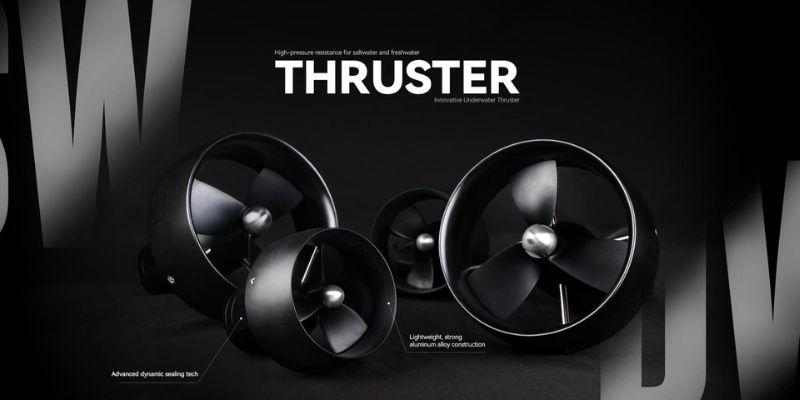
Currently, CubeMars underwater propulsion products mainly cover the SW and DW series. Both belong to the ROV Thruster product line, but they are clearly differentiated in terms of application focus.
CubeMars Underwater Thruster Series Comparison
| Series | Main Characteristics | More Suitable Applications | Core Advantages |
| SW Series Underwater Thruster | Lightweight, integrated structure, highly flexible integration | Compact ROVs, lightweight AUVs, educational platforms, underwater robots | Compact structure, easy deployment, ideal for space-constrained platforms |
| DW Series Underwater Thruster | Higher thrust output, stronger structural design, supports deep-water environments | Industrial-grade ROVs, underwater inspection systems, complex operation platforms | Stronger deep-water adaptability and higher continuous output capability |
From an overall positioning perspective, the SW series is more oriented toward lightweight and compact platforms, while the DW series is designed more for industrial-grade and high-load applications.
SW Series: Designed for Compact and Lightweight Platforms
For small and medium-sized underwater platforms, propulsion systems often need to integrate power, control, and structural design within extremely limited space.
These systems usually place greater emphasis on:
Thruster size and weight
Installation flexibility
Overall efficiency performance
Wiring and integration complexity
As a result, lightweight integrated structures can significantly reduce overall integration difficulty.
The CubeMars SW series is specifically designed around this direction, featuring a relatively compact structure that is more suitable for:
Compact ROVs
Educational and research platforms
Portable underwater systems
Lightweight autonomous underwater vehicles
For example:
Among them, the SW12 is more suitable for small-to-medium thrust platforms, offering easier integration in terms of size, weight, and overall system layout.
For compact platforms requiring multi-thruster configurations, this type of compact design can effectively reduce overall structural complexity.
DW Series: Better Suited for Industrial and Deep-Water Applications
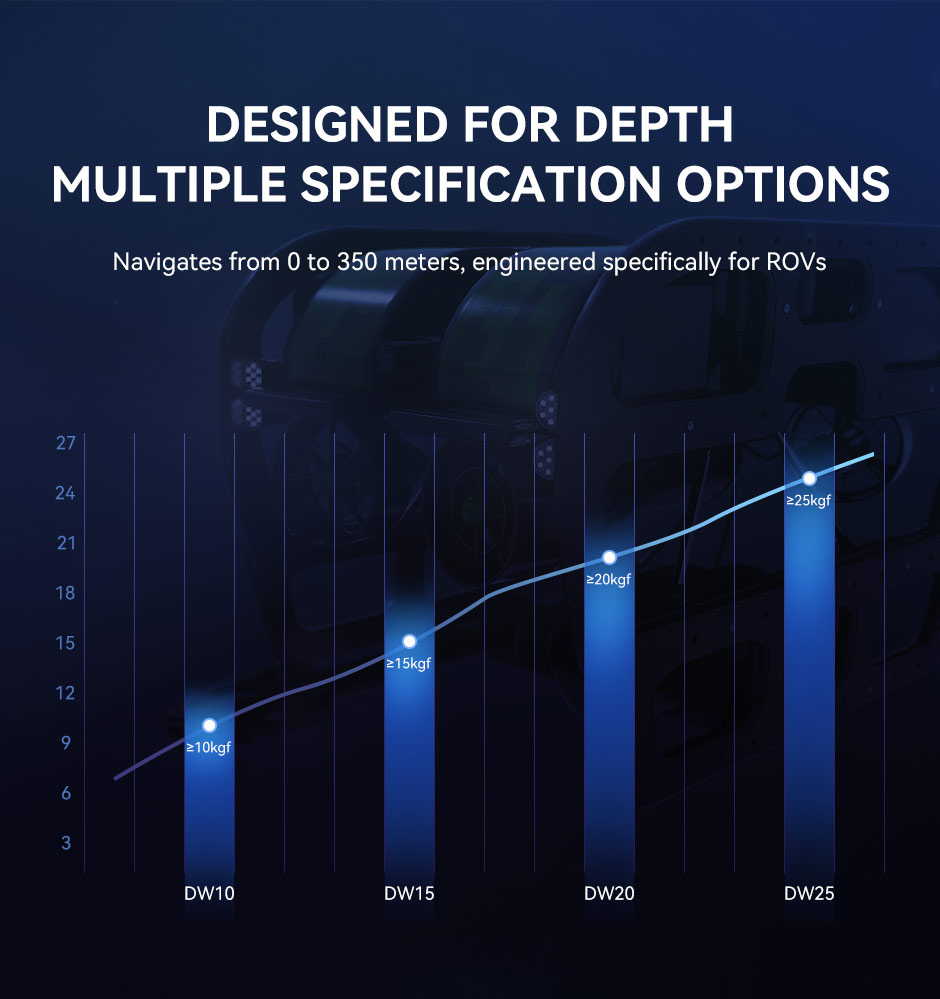
In contrast, industrial-grade ROVs and deep-water operation platforms usually focus more on:
Long-duration continuous operation capability
Stable high-thrust output
Deep-water environmental adaptability
Long-term reliability performance
Particularly in complex current environments, propulsion systems must not only generate thrust, but also continuously participate in attitude control and disturbance compensation.
These operating conditions place much higher requirements on:
Continuous motor output capability
Thermal management and heat stability
Structural strength
Sealing reliability
The CubeMars DW series is designed more specifically for these types of applications.
For example:
Compared with lightweight propulsion solutions, the DW series typically places greater emphasis on:
| Engineering Focus | Importance to the System |
| Higher structural strength | Improves deep-water adaptability |
| Stronger continuous output capability | Supports long-duration high-load operation |
| More stable sealing design | Enhances reliability in harsh environments |
| Higher thrust reserve | Improves current resistance and operational stability |
As a result, this propulsion solution is more suitable for:
Industrial inspection ROVs
Deep-water inspection platforms
Offshore engineering equipment
Long-duration underwater operation systems
How to Select the Right Thruster Solution
From a system design perspective, there is fundamentally no "universally stronger"thruster solution. The key is balancing propulsion characteristics according to platform objectives.
If the platform focuses more on:
Compact structure
Lightweight design
High integration efficiency
Then lightweight propulsion solutions are usually more suitable.
On the other hand, if the system prioritizes:
Long-duration continuous operation
Reliability in deep-water environments
Stable high-load output
Then industrial-grade propulsion solutions are generally the better choice.
In other words, the core of thruster selection has never been about comparing a single specification, but rather about balancing the overall requirements of the platform.
As underwater robotics and unmanned marine systems continue to evolve, propulsion systems are no longer merely basic power components. They have become core systems that directly influence control stability, endurance capability, and long-term operational reliability.
Compared with conventional drive systems, underwater thrusters must continuously deal with high-load operation, thermal limitations caused by sealed structures, water-current disturbances, and long-term seawater reliability challenges. As a result, the design focus of underwater propulsion systems has gradually shifted from "peak performance" toward"long-term stable operating capability."
In practical selection processes, different platforms also prioritize different aspects. Industrial-grade ROVs focus more on thrust stability and control capability, AUVs emphasize propulsion efficiency and endurance, while compact platforms rely more heavily on compact structures and high integration capability.
A truly effective thruster solution is rarely the one with the highest single specification, but rather the one that achieves the most suitable balance among efficiency, control performance, reliability, and structural constraints for the target mission.


